


2026 Travel Guide to Best Places To Visit In India In May June: Spiti & Ladakh Road Trips, Weather & Itinerary Tips
For travelers seeking the best places to visit in India in May June, the Himalayan regions of Spiti Valley and Ladakh stand out. These high-altitude destinations offer clear skies, open roads, and vibrant landscapes during May and June.
In fact, both areas rank among India’s top May-June road-trip destinations. During these months, the weather is mild, making it the best time to visit Spiti Valley and the best time to visit Ladakh. The spring thaw opens mountain passes, enabling adventure trips like Spiti Valley road trips and Leh Ladakh road trips, while colorful valleys and ancient monasteries come to life.
Why May and June Are the Best Months to Visit Spiti and Ladakh
Late spring and early summer (May-June) bring reliable weather and open roads in both Spiti and Ladakh. In Spiti, average daytime temperatures climb to 15–25°C, making sightseeing and trekking pleasant. Ladakh similarly sees warm days (often 15–20°C) and cold nights from May-June.
Critically, the high passes clear of snow by late May, for example, Kunzum La (4,551 m) on the Spiti-Leh route, allowing the full circuit to be traversed. Similarly, the Manali–Leh highway and Srinagar-Leh routes are generally open by early June (though check the BRO road status).
Tourists thus enjoy open highways, such as Manali-Kaza (Spiti) or Leh-Nubra, without the winter closures. In short, May-June combines peak accessibility with spring blooms, making them ideal months to travel these road trips.
1. Weather Conditions in Spiti Valley in Summer
In summer, Spiti Valley transforms into a pleasant high-altitude desert. Daytime highs typically reach 15-25°C while nights remain cool. The highest settlements, like Kaza (≈3,800 m), see chilly mornings but warm afternoons.
Weather peaks in July-August, but by May-June the valley is already snow-free and drivable. The best time to visit Spiti Valley is from May to September, when roads via Shimla or Manali are clear and the climate is relatively mild.
Monsoon impacts are minimal (Spiti is in a rain shadow), though occasional showers can occur. During peak summer, skies are usually clear, ideal for adventure trips in Spiti. Tourist facilities (guesthouses, fuel) begin reopening by June, so early June onward is usually safe.
2. Ladakh Weather in May vs June: Temperature and Road Status
Leh Ladakh’s climate warms quickly by May. In May, Leh experiences mild days (15-20°C) and cold nights (~5-8°C). Snow lingers on the highest passes (e.g., Tanglang La, 5,328 m), so some routes may still open gradually. By June, most passes are clear; Ladakh in June gives you open roads, clear skies, and access to its best landscapes. Temperatures in June often range from 18 to 25°C by day.
The Delhi-Srinagar-Leh highway (via Zoji La, 3,528 m) is usually open from late May, and the Manali-Leh route definitely opens by mid-June. (Travelers should always check up-to-date road status.) Nighttime lows remain chilly (near freezing at passes). In summary, Leh Ladakh in May month is cool with some snow-bound stretches, while June is peak travel season with almost all roads open and bright weather.
Advantages and Drawbacks of Peak Summer Travel
Traveling in May–June brings major advantages:
Roads are mostly open and the weather is clear, making it perfect for trekking and adventure. High-altitude lakes (Pangong, Tso Moriri) and valleys (Nubra, Spiti) are accessible, wildflowers bloom, and daylight is long.
Adventure enthusiasts praise this season for road trips, river runs, and long days under a clean blue sky. However, there are trade-offs. Tourist inflow peaks, especially in Ladakh, driving up accommodation and taxi costs. For example, Leh hotel rates roughly double from May to June (basic guesthouses rise from ~₹1,200 to ₹2,000-3,500).
Car or bike rentals and taxi tours (e.g., Leh-Nubra roundtrip ~₹10,000-12,000) also surge. Altitude remains a concern: cold nights and possible AMS (acute mountain sickness) require careful acclimatization. Roadblocks due to landslides or late snows (especially early June) can still occur, notably on the Manali-Spiti route.
On balance, pros include comfortable weather and activity availability; cons are higher costs and crowds in some areas. Packing warm layers and planning ahead can mitigate most downsides.
Choosing Between Spiti and Ladakh: Which Road Trip Fits Your Travel Style
Spiti and Ladakh share alpine culture but cater to different tastes. Adventurers who want raw, isolated desert beauty often choose Spiti. Its narrow valleys and stone villages (Tabo, Dhankar) offer a rustic, offbeat experience.
Spiti Valley road trip guides emphasize simplicity: few crowds and villages you can go back to forever. The terrain is rugged, but roads (via Shimla/Kinnaur) are generally easier (the highest pass is Kunzum La, 4,551 m).
By contrast, Ladakh road trip itineraries include grand lakes and wide vistas. Those seeking iconic vistas, high mountain passes, and a mix of Tibetan culture (Hemmed monasteries, Buddhist festivals) will lean toward Ladakh.
The region’s vastness and the appeal of sites like Pangong Tso or Nubra make it a favorite for first-time travelers. It’s also ideal for bike trips and adventure trips (e.g., Manali–Leh or Srinagar–Leh loops).
However, Ladakh can be more commercial and costly. Travelers preferring a somewhat quieter, economical journey might pick Spiti and explore via Spiti Valley tour packages (many include offbeat trails). Those who prefer adrenaline-pumping routes and high-altitude thrills may opt for Ladakh tour packages with features like mountain biking and river rafting.
In short: if you want a bike trip on remote Himalayan roads, try Spiti; if you want epic lakes and passes, go to Ladakh. Both are “best time to visit in May June” destinations, so the choice comes down to style and stamina.
Accessibility and Route Comparison
Spiti routes: There are two main approaches to the Spiti Valley. Route 1 goes Delhi→Shimla→Kinnaur (Kalpa, Nako)→Spiti (Tabo, Kaza). Route 2 is Delhi→Manali→Atal Tunnel→Kunzum Pass→Spiti. The Shimla route is mostly paved, allowing sedans if driven carefully. The Manali route (Gramphu-Batal) can be rough and is best done in an SUV or by experienced riders. Both routes meet at Kaza. Fuel is available in Kaza, Reckong Peo, and along Shimla-Rampur (a few between Kinnaur and Kaza).
Ladakh routes: Likewise, Ladakh has two gateways. The Srinagar-Leh highway (via Zoji La, 3,528 m) totals ~434 km and is scenic (shooting spots en route). The Manali–Leh highway (via Atal Tunnel, Baralacha La 4,890 m, Tanglang La 5,328 m) is ~472 km and more rugged. Both require acclimatization stops. International travelers sometimes fly into Leh (3,500 m) to avoid early altitude strain. A complete Ladakh road trip can loop Delhi→Manali→Leh→Srinagar or vice versa.
Both trips traverse high passes (Spiti’s highest is Kunzum La at 4,551 m; Ladakh’s includes Tanglang La, 5,328 m, and Khardung La, ~5,359 m). Spiti’s passes are slightly lower on average, making acclimatization marginally easier. However, all routes here are strenuous—any trip requires careful planning.
Budget Comparison for a Spiti vs Ladakh Trip
Budget-wise, Ladakh is generally costlier than Spiti. For Spiti, an 8-10 day circuit by own car or bike is about ₹15,000-30,000 per person (including fuel). Self-drive expenses often rival organized Spiti Valley tour packages, so many travelers skip agencies.
In contrast, Ladakh’s peak season spikes prices: a basic room in Leh goes from ~₹1,200 in May to ₹2,000-3,500 in June. Taxi tours (e.g., Leh-Nubra-Pangong) cost ~₹10,000-11,000.
Fuel is ~₹5-10 higher per liter in Ladakh. On the whole, a self-driven Ladakh trip for 7-10 days might run ₹25,000–40,000 per person (still lower than a package) due to higher lodging/food costs.
Spiti’s adventure trips can be much cheaper if camping or homestays are used. In either case, booking ahead is wise: free camping spots are limited, and peak-season camps or hotels fill fast.
Difficulty Level and Travel Experience
Physically, both trips demand respect for altitude and remote conditions. Leh (3,500 m) is slightly lower than Kaza (3,800 m), but both offer thin air. Early days should focus on acclimatization; for example, rest in Shimla or Manali first, then ride gradually.
Road surfaces vary: Spiti’s Shimla route is largely paved, but expect unpaved stretches near key sites (Chandratal, Pin Valley). The Manali-Spiti road (via Kunzum) can be rough. Ladakh’s highways are mostly paved, but stretches (Srinagar-Leh’s Fotu La, Manali–Leh’s Tso Kar) have gravel. Both regions require driving/biking skills on mountain passes with hairpins.
In terms of adventure: bike trips in Ladakh are legendary (“biking feels almost sacred”), thanks to vast, dramatic landscapes. Spiti’s rides are quieter but equally thrilling, winding through cliffside roads. Seasonal snowmelt can leave water crossings. Health-wise, carry altitude sickness meds, sunglasses, and sunblock for both. The internet is patchy; Leh has better connectivity than Kaza.
Finally, safety: both regions have friendly locals, but limited medical facilities outside towns. Ensure vehicles are well-serviced (carry spare tires/fuel), and travel Insurance is recommended for remote travel.
Spiti Valley Road Trip Guide
A Spiti Valley road trip can be planned via Shimla or Manali (or a loop combining both). Key stops include Sangla and Chitkul (Kinnaur) en route, Tabo Monastery, Kaza (market hub), and side valleys like Pin Valley (Treta) and Langza/Komic villages (world’s highest post office).
From Shimla, the highway (NH5) passes through Rampur and Kinnaur before climbing to Nako and Tabo. If coming via Manali, one crosses the Atal Tunnel (3,000 m) and climbs Kunzum La (4,551 m) into Spiti. Both routes merge at Kaza.
Along the way, Spiti Valley tour packages often highlight Pin Valley and Chandratal Lake. You’ll need a Rohtang Pass permit (available at rohtangpermits.nic.in) for the Manali side. The Manali-Kaza route opens by the last week of May or the first week of June. Entry from Shimla has no high passes until Kinnaur’s small passes, making it a smoother ascent.
Best Route for Spiti Road Trip: Shimla or Manali
Shimla-Spiti (via Kinnaur): This route is slightly longer but more paved and scenic through orchards and villages. As one source advises, “a sedan can manage” the Shimla-Kaza road. It avoids the riskier Batal section of the Manali road. Enter Spiti via Kalpa-Nako-Tabo.
Manali–Spiti (via Kunzum La): Much shorter but with higher passes. After the Atal Tunnel, it crosses Kunzum La (4,551 m). Certain sections (Gramphu-Batal) are rough, so an SUV or bike is safer. This route provides a loop back to Manali via Chandratal and Kunzum.
Many travelers do a circuit: enter from Shimla, loop around Spiti, and exit via Manali (or vice versa). This captures diverse scenery and avoids retracing. Note: Atal Tunnel (NH-3) opens all year, which now lets Shimla–Leh travelers bypass snowbound passes.
Suggested Spiti Itinerary for May and June
A typical 10-12 day Spiti itinerary (Delhi loop) is: Delhi→Shimla→Sangla/Chitkul (Kinnaur)→Nako→Tabo→Dhankar→Kaza (3–4 days sightseeing: Key Monastery, Pin Valley, Langza/Hikkim/Komik/Ki/Kibber)→Losar→Kunzum Pass→Chandratal (optional detour)→Atal Tunnel→Manali→Delhi.
This covers about 1,600 km of the Himalayan road. The Manali–Spiti road typically opens in late May. If time is short, even a 7-8 day trip via Shimla (stopping in Tabo, Kaza, Losar) can work, but risk missing Kunzum/Chandratal.
Budget: Plan ₹12,000-15,000 per person if self-driving. Accommodation ranges from basic guesthouses (₹500-1,000) to camps. Many travelers simplify with Spiti tour packages (which include permits and stays), but DIY is cheaper.
Top Places to Visit in Spiti Valley
Tabo Monastery: Ancient 10th-century cliff monastery in Tabo (an entrance permit may be needed for foreigners).
Dhankar Monastery & Lake: Dramatic cliff-top gompa overlooking the Spiti-Pin confluence.
Kaza Town: The valley’s hub, local markets, monasteries (Hikkim), and the nearest ATM.
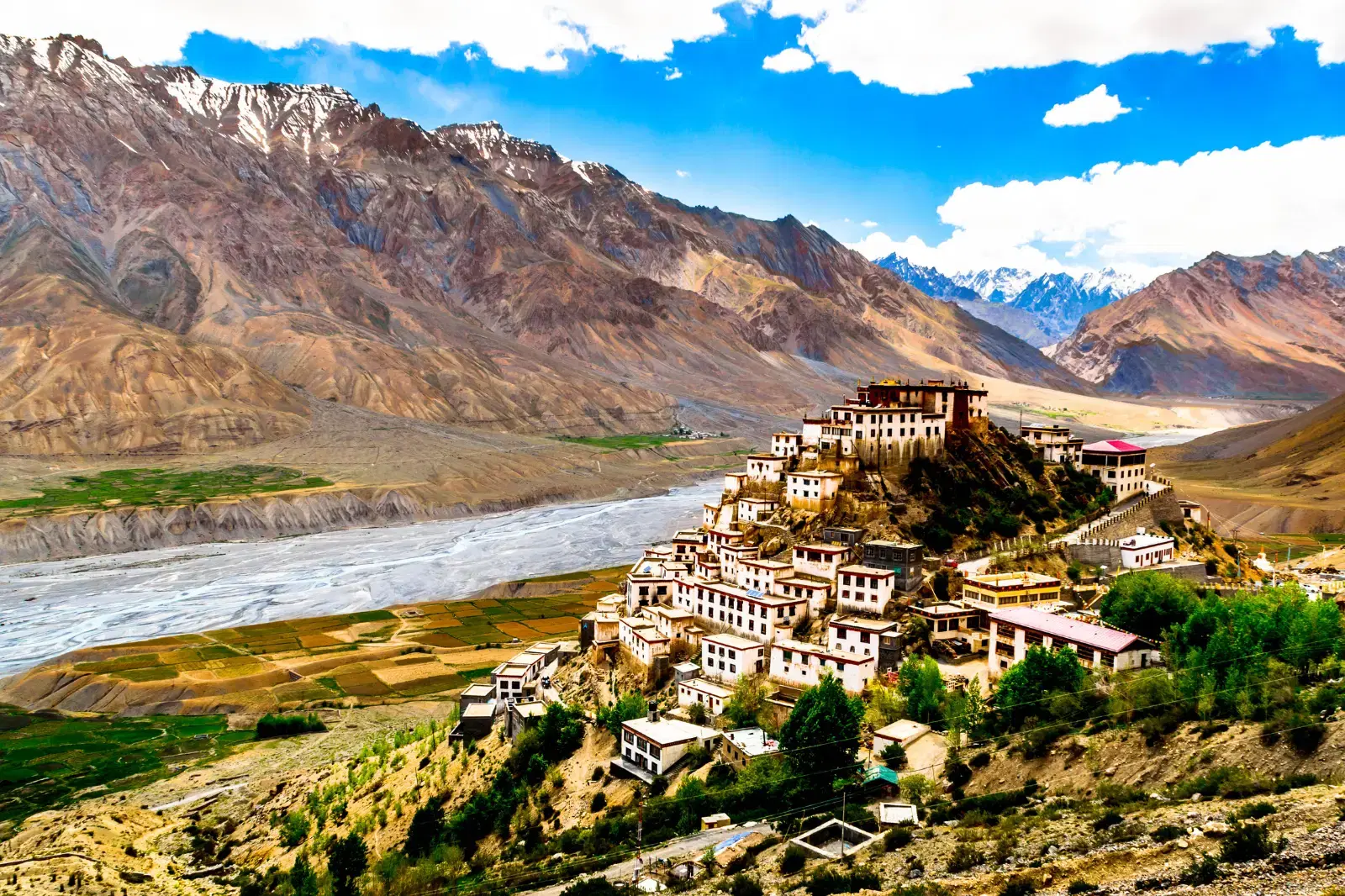
Key Monastery: A hilltop monastery near Kaza offering panoramic views.
Pin Valley (Treta): Wildlife-rich national park; home to rare snow leopards and ibex.
Langza/Hikkim/Komik: Three quaint villages famous for Buddhist stupas (Langza’s Buddha statue) and the world’s highest post office (Hikkim).
Chandratal Lake: An alpine lake (4,300 m) with turquoise water, accessible by a rugged detour off the main road.
Kunzum Pass: The high mountain pass into Spiti (4,551 m) with gorgeous views.
Ladakh Road Trip Guide
A classic Ladakh road trip covers Leh and three loops:
Leh–Nubra–Pangong Circuit (~450 km, 3–4 days): Leh→Khardung La (5,359 m)→Diskit/Hunder (Nubra Valley)→Shyok→Pangong Tso→Chang La→Leh.
Leh–Tso Moriri Circuit (~600 km, 3-4 days): Leh→Upshi→Tso Moriri (lake)→Chumathang→Tso Kar→back via Kyagar or Pangong route.
Direct loops/roads: e.g., Leh→Hanle (visiting space observatory), Nubra extension to Turtuk (last village near Pakistan), etc.
Popular sights include Pangong Tso (saline lake famous from movies), Tso Moriri (remote high lake), Nubra’s sand dunes (ride Bactrian camels), Hemis/Thiksey monasteries, and the Kargil war memorial.
The town of Leh offers markets, Leh Palace, and acclimatization. Expect driving times of 6-8 hours between major stops. Local taxis follow fixed rates (approximately ₹10-12k for full-day round trips), or hire jeeps by the day.
Manali to Leh Highway Status in May and June
The Manali–Leh highway (via Atal Tunnel) is normally closed until early June. BRO clears snow, but at 4,890 m Baralacha La and 5,328 m Tanglang La, conditions can linger. Typically, the road opens around mid-June and closes by early October.
In 2026, travelers should expect late May to early June as the opening window, but always verify road updates before departure. Early-season travelers should plan detours via Shimla/Srinagar if Manali is blocked.
Srinagar to Leh Route Overview
The Srinagar-Leh highway (NH1D, ~434 km from Srinagar to Leh) is usually the first to open (often by May). Key passes include Zoji La (3,528 m) and Fotu La (4,108 m). Average travel time is 2–3 days; most teams overnight at Kargil or Sonamarg. This route gains altitude more gradually (Srinagar ~1,700 m to Leh 3,500 m) than the Manali route.
It offers stunning Kashmiri scenery early on. However, infrastructure (fuel, lodging) is sparser in the final stretches, so carry essentials. Always check local advisories for landslides. The Leh-Kargil section has multiple checkposts, but no permit is needed for Indians.
Must-Visit Places in Ladakh
Pangong Tso: High-altitude lake (~4,350 m) with brilliantly changing colors.
Nubra Valley (Diskit/Hunder): Scenic valley north of Leh; famous for sand dunes and monasteries.
Tso Moriri and Tso Kar: Remote blue lakes in the Changthang region, rich in birdlife.
Hemis Monastery: Largest gompa in Ladakh, site of annual Hemis festival.
Thiksey Monastery: Picturesque monastery resembling Potala Palace, with an impressive Buddha statue.
Magnetic Hill: A gravity hill near Leh where cars appear to roll uphill.
Khardung La: Once claimed world’s highest motorable pass (5,359 m), though actual height may be slightly lower.
Spituk Monastery (Serchu): Known for snow leopard conservation.
Weather Guide for Spiti and Ladakh in May and June
By May-June, both regions enjoy long sunny days but chilly nights. Pack layered clothing: thermal inners and fleece for dawn/dusk, plus a windproof jacket. Sunglasses and sunscreen are essential (UV is intense at altitude). Spiti nights can drop to 5-8°C even in summer, while Leh nights hover slightly below 10°C.
Afternoon thunderstorms are rare but not impossible. Always have a waterproof layer and some warm gear. Spiti’s higher pockets (Pin Valley, Chandratal) can get snow in June if winter was heavy, so the Shimla route stays open longer than Manali’s Cho La/Kunzum stretches. Ladakh’s passes generally open by June, but carry chains or expect detours if early snows occur.
Temperature Range and Packing Essentials
Expect daytime highs of 15-25°C and lows of 0-10°C. At very high elevations (passes, nights), it can drop below 0°C. Rapid weather changes mean pack for both sun and cold. Essentials include:
Layers: Thermal inner, fleece/jacket, and a light down jacket.
Sun protection: Sunglasses (UV-blocking), high-SPF sunscreen, lip balm.
Headgear: Hat or bandana for sun; warm beanie for cold mornings.
Footwear: Good hiking shoes/boots (water-resistant) and warm socks.
Misc: Water bottle, basic first-aid, altitude sickness pills, power bank.
Biking gear: If on a motorcycle trip, include gloves (waterproof, padded).
Road Conditions and Snow Clearance Updates
By May, most village roads in Spiti (via Shimla) are cleared of snow. The Atal Tunnel ensures the Manali side is snow-free up to the South Portal year-round. In Ladakh, Srinagar–Leh is usually open by late May; Manali–Leh by mid-June.
However, smaller routes (Zanskar valley, Hanle) open later. Always verify road status shortly before travel. BRO and local news (e.g., BRO hotline, district websites) provide updates. Distant cellphone (BSNL) works in most towns, but don’t rely on it in the mountains.
Essential Travel Tips for High-Altitude Road Trips
Acclimatize Slowly: Spend at least 24h at 3,000+m (Shimla/Leh) before ascending. Hydrate and avoid alcohol initially.
Permits: Carry all required permits (see next section). Keep photocopies.
Fuel Up: Fill up often, as large gaps exist between stations (e.g., Reckong Peo to Kaza). Carry extra fuel if possible.
Cash: ATMs are rare. Leh and Kaza have a couple; keep cash otherwise.
Stay Informed: Check local weather and road updates. Inform someone of your itinerary.
Respect Locals/Environment: Ask before photographing villagers. Avoid litter; glaciers and lakes are fragile.
Vehicle Check: Service your car/bike before the trip. Carry spare tubes/tires, tools, and a puncture repair kit.
Travel Insurance: Consider it for medical evacuation (AMS risk).
Permits Required for Spiti and Ladakh
Ladakh (Leh): Indians need an Inner Line Permit (ILP) to visit protected areas like Nubra, Pangong, and Tso Moriri. Tourists can apply online via the official LAHDC Leh permit portal (lahdclehpermit.in). The ILP costs a one-time fee (~₹400+), and the environmental permit (~₹20/day) is collected with it.
Spiti Valley (Himachal): Indian citizens do not require a permit to enter Spiti Valley. However, certain sites (e.g., Tabo, Kaza, Morang) are officially protected for foreigners. Foreign nationals need Protected Area Permits from the District Headquarters (though these are generally free and issued on the spot). There is no online ILP portal for Spiti; the HP Tourism site notes that while permits are nominally free, travelers often pay a small fee at offices.
Rohtang Pass (Manali–Spiti route): All vehicles need a Rohtang Pass permit (also called “Rohtang Pass vehicle permit” or “Beyond Rohtang Pass permit”), obtainable online at rohtangpermits.nic.in. This is a separate mandatory permit for the Atal Tunnel–Spiti road.
General Advice: Always keep copies of your passport/ID and permits. Official permit links: lahdclehpermit.in (Ladakh ILP) and rohtangpermits.nic.in (Rohtang).
Health and AMS Tips
High altitude (3,500-5,000 m) means symptoms like headache, nausea, or dizziness (AMS) are possible. Drink plenty of water and limit exertion for the first 1–2 days. Carry an altitude sickness medication (e.g., acetazolamide or herbal supplements). Eat light, high-carbohydrate meals.
In Leh, one popular tip is Tibetan butter tea and ginger-honey tea to ward off chills. If symptoms worsen, descend immediately. Oximeters are helpful if you have one. Note that the mobile network is spotty, so carry a paper map or an offline GPS.
Bike vs Car and What Is Better for Your Trip
Bike Trips: Great for solo or small groups, offering flexibility and an adrenaline rush. The Spiti and Ladakh roads are legendary among bikers (the thrill of climbing passes like Kunzum or Khardung La on a motorcycle is “almost sacred”). Popular bikes are Royal Enfields. Bikes also allow easier stops at the viewpoint. Downsides: exposure to cold/winds, less cargo space, and limited passengers. Fuel range is shorter, so plan stops.
Car/Taxi: More comfortable (weather protection, more luggage), easier for families or larger groups. Hiring a local driver lets you relax and chat with locals. Modern SUVs handle gravel and rough patches well. Cars are slower in traffic on narrow stretches (Khardung, Zojila). Cost per person is higher unless split.
Recommendation: Many adventure tour companies offer combined packages (bike rental + hotel) for a balanced experience. If you enjoy adventure trips, a self-driven bike trip is thrilling; if you prefer ease, a hired SUV is safer. You can also mix: ride a bike one way and take a taxi back (or vice versa).
What to Pack for Spiti and Ladakh in Summer
Clothing: Light T-shirts and trekking pants for the day; warm fleece or down jacket for mornings/evenings. Waterproof layer for occasional rain. Gloves (especially for bikers) and warm headwear.
Footwear: Sturdy hiking shoes/boots (you’ll walk uneven terrain). Trekking sandals (for camps) are optional.
Health/Personal: Sunscreen (SPF 50+), lip balm, sunglasses, and a hat/cap. Toiletries and personal meds (including AMS medicine if prescribed).
Misc: Water purifier or Steripen (water at altitude can cause stomach issues). Snacks/energy bars (shops are few). Portable charger/battery bank. One guide warns: even in summer, you do not need a huge suitcase, but you do need the right layers.
Sample Combined Spiti and Ladakh Itinerary for Advanced Travelers
For those with ~15–20 days, a combined Spiti–Ladakh circuit is popular. One itinerary: Delhi-Shimla-Spiti (Kaza)-Manali-Leh-Kargil-Srinagar-Delhi.
This covers both valleys in one loop. For example, start in Delhi, head to Shimla, explore Spiti (Kaza, Losar, Chandratal), exit to Manali by mid-June, then ride the Manali-Leh highway (overnight at Sarchu or Pang).
Spend several days in Leh (Nubra, Pangong loop), then on July 4th, drive from Srinagar to Leh and return to Delhi. This trip demands acclimatization breaks.
Alternatively, do Delhi-Leh (fly)-Nubra/Pangong circuits-Hanle-Wari La-Spiti via the high Wari La pass (5,200 m). Or Delhi-Spiti loop first (June), then return to Delhi and start a separate Leh trip. It’s intensive but possible with careful planning.
Common Mistakes to Avoid on Spiti and Ladakh Trips
Rushing Itinerary: Don’t plan back-to-back long drives without rest. Even if roads are open, fatigue causes accidents.
Underestimating Weather: Mountain weather is unpredictable. Carry layers and check forecasts daily.
Ignoring Acclimatization: Skipping a rest day at Leh or Shimla is a common error. Stay hydrated.
Permit Lapses: Don’t cross protected zones (Nubra, Moriri, etc.) without an ILP. Fines are hefty. Apply for permits in advance.
Fuel Gaps: Do not risk running on empty. E.g., no petrol between Reckong Peo and Kaza.
Not Booking Early: Peak season rooms and bikes sell out by April.
Littering: Do not leave trash; carry it back to Leh/Manali.
Go Beyond the Usual with Gantu
A road trip this beautiful should not become stressful just because the logistics are messy. That is where Gantu fits naturally. Its brand promise is built around going beyond the usual, and its Himalayan listings for Spiti and Ladakh already bundle the core things road-trippers care about most: transfers, accommodation, selected meals, sightseeing, and activities.
How Gantu Helps on Spiti and Ladakh Trips
What makes that useful is not only the package structure, but the service pattern visible across traveler feedback on the site. Reviews repeatedly describe customized planning around traveler interests, meticulous organization, help with extra itinerary days, smooth hotel and transfer coordination, on-time pickups, useful suggestions, and a strong sense of safety and support during the trip.
On mountain journeys where road windows, acclimatization, stay availability, and local transport timing matter so much, that kind of planning support can turn a complicated route into a smoother holiday.
If you want the views, the passes, the lakes, and the story without spending weeks stitching every piece together yourself, Gantu is the kind of travel partner that can make this journey feel cleaner, calmer, and more confidence-inspiring from the first booking to the final return drive.
Conclusion
Spiti Valley and Ladakh rank among the May–June best places to visit in India for good reason: breathtaking landscapes, adventure, and generally great weather. Late spring is the sweet spot when both regions “open their arms” with clear roads and vibrant scenery.
To choose between them, match your interests (remote desert vs high-altitude lakes) and fitness level. No matter what, plan carefully, check permits on official sites, prepare for altitude, and pack for sun and cold. Whether you pick a self-drive Spiti Valley road trip or a guided Leh Ladakh road trip itinerary, you’re in for an unforgettable Himalayan journey.
FAQs
Is May a good month for a Spiti Valley road trip?
Yes, especially if you use the Shimla side. The district calls the Shimla-Kaza route almost all-weather, while the Manali-side crossover through Kunzum can reopen much later, so May works best when your plan stays flexible.
Is Leh, Ladakh, in May a good idea for first-time travelers?
Yes, but the route matters. The official Leh page says the Srinagar-Leh highway usually opens earlier than the Manali-Leh highway, so May is usually better for a Srinagar entry than for a full Manali circuit.
What is the best time to visit Spiti Valley and the best time to visit Ladakh for road trips?
For Spiti, official guidance points to mid-May through mid-October, with May and June offering a great early-summer window. For Ladakh, the road season begins from May on the Srinagar side and from May or June on the Manali side.
Should I choose Spiti or Ladakh for my first Himalayan road trip?
Choose Spiti if you want a quieter, rougher, more offbeat road journey and do not mind thinner infrastructure. Choose Ladakh if you want a stronger sightseeing loop from Leh and are ready to take acclimatization more seriously, given the higher passes and lake circuits.
Do I need permits for Spiti and Ladakh?
For Ladakh, the Leh district site currently maintains an online PAP/ILP portal and an online tourist-fee system, so complete your formalities before higher circuits. In Spiti, foreign visitors entering protected areas should check the district’s PAP process and issuing authorities at Keylong and Kaza.